Silver, Elderjuice's resident astrologer, has posted her September readings. He whole year book for 2012 will be available to buy through Elderjuice from November
Monday, August 29, 2011


Wednesday, August 24, 2011
Saturday, August 13, 2011
Thursday, July 28, 2011
A holiday for £100!
This Friday, 29th July, Easyjet holidays are offering 100 fantastic holidays for just £100,
Elderjuice.com has the special offer right here!
Elderjuice.com has the special offer right here!
Wednesday, July 27, 2011
Whisky Galore!
Compton Mackenzie's classic is re-released this Friday. See this article here on elderjuice.com
Tuesday, July 12, 2011
Easy airport parking
Tired of lugging suitcases around at the airport? ELDERJUICE has the answer to trouble free easy airport parking
Savings for over 60's
Elderjuice has some nifty savings if you are doing a cultural trip around Europe.
Sunday, June 19, 2011
Friday, June 10, 2011
Elderjuice already
well very nearly.
We will be live Tuesday 14th June 2011.
Please come and see us...
We will be live Tuesday 14th June 2011.
Please come and see us...
Saturday, April 30, 2011
Elderjuice
You might have noticed there is an Elderjuice blog.
Actually, there is an elderjuice.com website coming soon.
So if you want to read any of my musings in future, you'll need to find them there...
Actually, there is an elderjuice.com website coming soon.
So if you want to read any of my musings in future, you'll need to find them there...
Sunday, March 13, 2011
Tsunami shmunani
Yes the devastation and loss of life is terrible in Japan. Yes it will cost billions to sort out and people's lives will be forever changed. Yes you wouldn't wish it on your worst enemy ( well actually you might)
But there is just a little contarrian view to this.
Japan has been struggling for years with demand problems within it's economy and effectively a 20 plusw year standstill - which amongst other things has allowed C hina to overtake it on one measure of trading power.
Just think for a moment. All that infrastucture and material goods (roads,cars,planes, trains, houses etc etc) will all have to be rebuilt and replaced.The fiscal stimulus will be a geometric size bigger than all the government stimuli over the last umpteen years.
All the money the insurance companies sit on doing nothing will all come out of mothballs, and hey, it'll go into making things and building things and employing people.
I thjink that's what's called a light at the end of the tunnel ( and not a bullet train speeding towards you either)
But there is just a little contarrian view to this.
Japan has been struggling for years with demand problems within it's economy and effectively a 20 plusw year standstill - which amongst other things has allowed C hina to overtake it on one measure of trading power.
Just think for a moment. All that infrastucture and material goods (roads,cars,planes, trains, houses etc etc) will all have to be rebuilt and replaced.The fiscal stimulus will be a geometric size bigger than all the government stimuli over the last umpteen years.
All the money the insurance companies sit on doing nothing will all come out of mothballs, and hey, it'll go into making things and building things and employing people.
I thjink that's what's called a light at the end of the tunnel ( and not a bullet train speeding towards you either)
Thursday, February 10, 2011
How to be a succesful, beloved president ( or Prime Minister)
It should not be forgotten that is was the era when Communism was smashed, when Britain re-gained it's self-respect, and STILL people in Scotland hate Maggie Thatcher with a venom and bile that defies description. Of course, they hate her ( and Reagan) because they were made to face reality.
Sadly, I don't think the present government has it in them to do the same.
By ARTHUR B. LAFFER
For 16 years prior to Ronald Reagan's presidency, the U.S. economy was in a tailspin—a result of bipartisan ignorance that resulted in tax increases, dollar devaluations, wage and price controls, minimum-wage hikes, misguided spending, pandering to unions, protectionist measures and other policy mistakes.
In the late 1970s and early '80s, 10-year bond yields and inflation both were in the low double digits. The "misery index"—the sum of consumer price inflation plus the unemployment rate—peaked at well over 20%. The real value of the S&P 500 stock price index had declined at an average annual rate of 6% from early 1966 to August 1982.
For anyone old enough today, memories of the Arab oil embargo and price shocks—followed by price controls and rationing and long lines at gas stations—are traumatic. The U.S. share of world output was on a steady course downward.
Then Reagan entered center stage. His first tax bill was enacted in August 1981. It included a sweeping cut in marginal income tax rates, reducing the top rate to 50% from 70% and the lowest rate to 11% from 14%. The House vote was 238 to 195, with 48 Democrats on the winning side and only one Republican with the losers. The Senate vote was 89 to 11, with 37 Democrats voting aye and only one Republican voting nay. Reaganomics had officially begun.
President Reagan was not alone in changing America's domestic economic agenda. Federal Reserve Chairman Paul Volcker, first appointed by Jimmy Carter, deserves enormous credit for bringing inflation down to 3.2% in 1983 from 13.5% in 1981 with a tight-money policy. There were other heroes of the tax-cutting movement, such as Wisconsin Republican Rep. Bill Steiger and Wyoming Republican Sen. Clifford Hansen, the two main sponsors of an important capital gains tax cut in 1978.
View Full Image
Associated Press
Ronald Reagan after signing his first tax cut, Aug. 14, 1981.
What the Reagan Revolution did was to move America toward lower, flatter tax rates, sound money, freer trade and less regulation. The key to Reaganomics was to change people's behavior with respect to working, investing and producing. To do this, personal income tax rates not only decreased significantly, but they were also indexed for inflation in 1985. The highest tax rate on "unearned" (i.e., non-wage) income dropped to 28% from 70%. The corporate tax rate also fell to 34% from 46%. And tax brackets were pushed out, so that taxpayers wouldn't cross the threshold until their incomes were far higher.
Changing tax rates changed behavior, and changed behavior affected tax revenues. Reagan understood that lowering tax rates led to static revenue losses. But he also understood that lowering tax rates also increased taxable income, whether by increasing output or by causing less use of tax shelters and less tax cheating.
Moreover, Reagan knew from personal experience in making movies that once he was in the highest tax bracket, he'd stop making movies for the rest of the year. In other words, a lower tax rate could increase revenues. And so it was with his tax cuts. The highest 1% of income earners paid more in taxes as a share of GDP in 1988 at lower tax rates than they had in 1980 at higher tax rates. To Reagan, what's been called the "Laffer Curve" (a concept that originated centuries ago and which I had been using without the name in my classes at the University of Chicago) was pure common sense.
There was also, in Reagan's first year, his response to an illegal strike by federal air traffic controllers. The president fired and replaced them with military personnel until permanent replacements could be found. Given union power in the economy, this was a dramatic act—especially considering the well-known fact that the air traffic controllers union, Patco, had backed Reagan in the 1980 presidential election.
On the regulatory front, the number of pages in the Federal Register dropped to less than 48,000 in 1986 from over 80,000 in 1980. With no increase in the minimum wage over his full eight years in office, the negative impact of this price floor on employment was lessened.
And, of course, there was the decontrol of oil markets. Price controls at gas stations were lifted in January 1981, as were well-head price controls for domestic oil producers. Domestic output increased and prices fell. President Carter's excess profits tax on oil companies was repealed in 1988.
The results of the Reagan era? From December 1982 to June 1990, Reaganomics created over 21 million jobs—more jobs than have been added since. Union membership and man-hours lost due to strikes tumbled. The stock market went through the roof. From July 1982 through August 2000, the S&P 500 stock price index grew at an average annual real rate of over 12%. The unfunded liabilities of the Social Security system declined as a share of GDP, and the "misery index" fell to under 10%.
Even Reagan's first Democratic successor, Bill Clinton, followed in his footsteps. The negotiations for what would become the North American Free Trade Agreement began in Reagan's second term, but it was President Clinton who pushed the agreement through Congress in 1993 over the objections of the unions and many in his own party.
President Clinton also signed into law the biggest capital gains tax cut in our nation's history in 1997. It effectively eliminated any capital gains tax on owner-occupied homes. Mr. Clinton reduced government spending as a share of GDP by 3.5 percentage points, more than the next four best presidents combined. Where Presidents George H.W. Bush and Bill Clinton slipped up was on personal income tax rates—allowing the highest personal income tax rate to eventually rise to 39.6% from 28%.
The true lesson to be learned from the Reagan presidency is that good economics isn't Republican or Democrat, right-wing or left-wing, liberal or conservative. It's simply good economics. President Barack Obama should take heed and not limit his vision while seeking a workable solution to America's tragically high unemployment rate.
Mr. Laffer is the chairman of Laffer Associates and co-author of "Return to Prosperity: How America Can Regain Its Economic Superpower Status" (Threshold, 2010).
Sadly, I don't think the present government has it in them to do the same.
By ARTHUR B. LAFFER
For 16 years prior to Ronald Reagan's presidency, the U.S. economy was in a tailspin—a result of bipartisan ignorance that resulted in tax increases, dollar devaluations, wage and price controls, minimum-wage hikes, misguided spending, pandering to unions, protectionist measures and other policy mistakes.
In the late 1970s and early '80s, 10-year bond yields and inflation both were in the low double digits. The "misery index"—the sum of consumer price inflation plus the unemployment rate—peaked at well over 20%. The real value of the S&P 500 stock price index had declined at an average annual rate of 6% from early 1966 to August 1982.
For anyone old enough today, memories of the Arab oil embargo and price shocks—followed by price controls and rationing and long lines at gas stations—are traumatic. The U.S. share of world output was on a steady course downward.
Then Reagan entered center stage. His first tax bill was enacted in August 1981. It included a sweeping cut in marginal income tax rates, reducing the top rate to 50% from 70% and the lowest rate to 11% from 14%. The House vote was 238 to 195, with 48 Democrats on the winning side and only one Republican with the losers. The Senate vote was 89 to 11, with 37 Democrats voting aye and only one Republican voting nay. Reaganomics had officially begun.
President Reagan was not alone in changing America's domestic economic agenda. Federal Reserve Chairman Paul Volcker, first appointed by Jimmy Carter, deserves enormous credit for bringing inflation down to 3.2% in 1983 from 13.5% in 1981 with a tight-money policy. There were other heroes of the tax-cutting movement, such as Wisconsin Republican Rep. Bill Steiger and Wyoming Republican Sen. Clifford Hansen, the two main sponsors of an important capital gains tax cut in 1978.
View Full Image
Associated Press
Ronald Reagan after signing his first tax cut, Aug. 14, 1981.
What the Reagan Revolution did was to move America toward lower, flatter tax rates, sound money, freer trade and less regulation. The key to Reaganomics was to change people's behavior with respect to working, investing and producing. To do this, personal income tax rates not only decreased significantly, but they were also indexed for inflation in 1985. The highest tax rate on "unearned" (i.e., non-wage) income dropped to 28% from 70%. The corporate tax rate also fell to 34% from 46%. And tax brackets were pushed out, so that taxpayers wouldn't cross the threshold until their incomes were far higher.
Changing tax rates changed behavior, and changed behavior affected tax revenues. Reagan understood that lowering tax rates led to static revenue losses. But he also understood that lowering tax rates also increased taxable income, whether by increasing output or by causing less use of tax shelters and less tax cheating.
Moreover, Reagan knew from personal experience in making movies that once he was in the highest tax bracket, he'd stop making movies for the rest of the year. In other words, a lower tax rate could increase revenues. And so it was with his tax cuts. The highest 1% of income earners paid more in taxes as a share of GDP in 1988 at lower tax rates than they had in 1980 at higher tax rates. To Reagan, what's been called the "Laffer Curve" (a concept that originated centuries ago and which I had been using without the name in my classes at the University of Chicago) was pure common sense.
There was also, in Reagan's first year, his response to an illegal strike by federal air traffic controllers. The president fired and replaced them with military personnel until permanent replacements could be found. Given union power in the economy, this was a dramatic act—especially considering the well-known fact that the air traffic controllers union, Patco, had backed Reagan in the 1980 presidential election.
On the regulatory front, the number of pages in the Federal Register dropped to less than 48,000 in 1986 from over 80,000 in 1980. With no increase in the minimum wage over his full eight years in office, the negative impact of this price floor on employment was lessened.
And, of course, there was the decontrol of oil markets. Price controls at gas stations were lifted in January 1981, as were well-head price controls for domestic oil producers. Domestic output increased and prices fell. President Carter's excess profits tax on oil companies was repealed in 1988.
The results of the Reagan era? From December 1982 to June 1990, Reaganomics created over 21 million jobs—more jobs than have been added since. Union membership and man-hours lost due to strikes tumbled. The stock market went through the roof. From July 1982 through August 2000, the S&P 500 stock price index grew at an average annual real rate of over 12%. The unfunded liabilities of the Social Security system declined as a share of GDP, and the "misery index" fell to under 10%.
Even Reagan's first Democratic successor, Bill Clinton, followed in his footsteps. The negotiations for what would become the North American Free Trade Agreement began in Reagan's second term, but it was President Clinton who pushed the agreement through Congress in 1993 over the objections of the unions and many in his own party.
President Clinton also signed into law the biggest capital gains tax cut in our nation's history in 1997. It effectively eliminated any capital gains tax on owner-occupied homes. Mr. Clinton reduced government spending as a share of GDP by 3.5 percentage points, more than the next four best presidents combined. Where Presidents George H.W. Bush and Bill Clinton slipped up was on personal income tax rates—allowing the highest personal income tax rate to eventually rise to 39.6% from 28%.
The true lesson to be learned from the Reagan presidency is that good economics isn't Republican or Democrat, right-wing or left-wing, liberal or conservative. It's simply good economics. President Barack Obama should take heed and not limit his vision while seeking a workable solution to America's tragically high unemployment rate.
Mr. Laffer is the chairman of Laffer Associates and co-author of "Return to Prosperity: How America Can Regain Its Economic Superpower Status" (Threshold, 2010).
Wednesday, February 02, 2011
How very very true....
A father walks into a restaurant with his young son..
He gives the young boy three 10p coins to play with to keep him occupied.
Suddenly, the boy starts choking and going blue in the face....
The father realises the boy has swallowed the coins and starts slapping him
on the back..
The boy coughs up 2 of the 10p's but is still choking.
Looking at his son, the father is panicking, shouting for help.
A well dressed, attractive, and serious looking woman, in a blue business
suit is sitting at a coffee bar reading a newspaper and sipping a cup of
coffee.
At the sound of the commotion, she looks up, puts her coffee cup down,
neatly folds the newspaper, places it on the counter, gets up from her seat
and
makes her way, unhurried, across the restaurant.
Reaching the boy, the woman carefully pulls down his pants; takes hold of
the boy's' testicles and
starts to squeeze and twist, gently at first and then ever so firmly..
tighter and tighter !!!
After a few seconds the boy convulses violently and coughs
up the last of the 10p's, which the woman deftly catches in her free hand.
Releasing the boy's testicles, the woman hands the coin to the father and
walks back to her seat at the coffee bar without saying a word.
As soon as he is sure that his son has suffered no ill effects, the father
rushes over
to the woman and starts thanking her saying, "I've never seen anybody do
anything like that before, it was fantastic. Are you a doctor? "
'No,' the woman replied. I'm with the Inland Revenue..'
He gives the young boy three 10p coins to play with to keep him occupied.
Suddenly, the boy starts choking and going blue in the face....
The father realises the boy has swallowed the coins and starts slapping him
on the back..
The boy coughs up 2 of the 10p's but is still choking.
Looking at his son, the father is panicking, shouting for help.
A well dressed, attractive, and serious looking woman, in a blue business
suit is sitting at a coffee bar reading a newspaper and sipping a cup of
coffee.
At the sound of the commotion, she looks up, puts her coffee cup down,
neatly folds the newspaper, places it on the counter, gets up from her seat
and
makes her way, unhurried, across the restaurant.
Reaching the boy, the woman carefully pulls down his pants; takes hold of
the boy's' testicles and
starts to squeeze and twist, gently at first and then ever so firmly..
tighter and tighter !!!
After a few seconds the boy convulses violently and coughs
up the last of the 10p's, which the woman deftly catches in her free hand.
Releasing the boy's testicles, the woman hands the coin to the father and
walks back to her seat at the coffee bar without saying a word.
As soon as he is sure that his son has suffered no ill effects, the father
rushes over
to the woman and starts thanking her saying, "I've never seen anybody do
anything like that before, it was fantastic. Are you a doctor? "
'No,' the woman replied. I'm with the Inland Revenue..'
Sorry for the delay...
Dear Reader I apologise for the lack of posts.
Several conjunctions have rendered me helpless in the face of technology, of work and indeed lack of ideas.
But today - Halleluliah! - something caught my eye.
Fraser Nelson makes the very valid point over on Coffee House that a great man once said
"Economic forecasting only exists to make astrologers look good."
There is however one prediction I will make.
Whatever governments, businesses, individuals do, however much they borrow or save, however much they spend or hoard, the present malaise will only cure with time and the eighth wonder of the world.
That's compound interest, in case you don't know.
PS I apologise for the present blackness of the blog.
A well meaning friend fiddled - and somehow we can't fiddle it back.....
Several conjunctions have rendered me helpless in the face of technology, of work and indeed lack of ideas.
But today - Halleluliah! - something caught my eye.
Fraser Nelson makes the very valid point over on Coffee House that a great man once said
"Economic forecasting only exists to make astrologers look good."
There is however one prediction I will make.
Whatever governments, businesses, individuals do, however much they borrow or save, however much they spend or hoard, the present malaise will only cure with time and the eighth wonder of the world.
That's compound interest, in case you don't know.
PS I apologise for the present blackness of the blog.
A well meaning friend fiddled - and somehow we can't fiddle it back.....
Sunday, October 31, 2010
Clev-errr
I wonder how many people have picked up on the very clever allusion in the new AA ad for home co ver insurance?
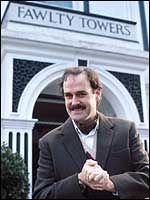 ver insurance?
And why, you may ask, is John Cleese, who has pots and pots of money, doing it?
Well, I suspect he has been offered so much money for a day's work that he couldn't turn it down ( or he's got a book/film to publicise).
So what is it?
Well, as the water pours down through the ceiling, his " daughter" says she will call the AA.
He replies," The AA? For faulty showers?"
Bliss.
Saturday, October 30, 2010
Sic Transit...

The crown Prince of Japan, an extremely erudite man, spent some time at Oxford.
The story goes that when he went for his interview, which mostly consisted of having dinner with the Master of Balliol, the following exchange took place.
Now Balliol regards itself as rather grand, a bit like the second regiment of the Gurkhas, or just about any Guards regiment.
At dinner, which was proceeding most smoothly, as you would imagine, the Master was making conversation and said to HRH " I've always been fascinated with Japan and it's culture and spiritual life. How exactly does the Royal Family fit into that?"
" Well," said the prince," There are, for instance, two sides to my position."
" How interesting, and what would they be?"
" Naturally, there is the temporal, which clearly defines my position as next in line to the throne."
" Of course, " said the Master, with an unctious smile." And the other?"
" The other is the spiritual, which, from my point of view, means I am a god."
" Ah, yes, I see, " said the Master." In that case, I'm sure you will feel very at home at Balliol."
Monday, October 18, 2010
True Phlegm

I know I'm not keeping up with the pace, but hey, sometimes I have stuff to do.
I had an exceptionally fine dinner last Thursday night for the Gurkhas in the New Club in Edinburgh, complete with regimental silver, generals, lords,kilts,trews,medals and an after dinner speech.
The speech was given by Professor David Purdie, who not only gave his services free but also donated the pre-dinner drinks. The reason was his 90 year old father-in-law had fought with the Gurkhas in Korea, and is ( possibly) the last surviving Gurkha officer from that period.
He gave an excellent speech, not so much for the content but for the delivery. It was replete with military stories of the great and good, none more so than the Brigadier in the Carlton Club which was blown up by the IRA in 1990.
He represented everything a British Brigadier is known for: shoes so shiny you could see your face in them; suit immaculately correct; regimental tie; and true phlegm.
The Brig was having his dinner when the bomb went off. He was eating his dessert, and as the building collapsed around him, a cone of plaster formed on his head - and on the spoon of pud that was making it's way to his mouth.
As he came to rest somewhere between the first floor and the basement, complete with table and chair and himself intact, he took stock of the situation with a mind honed from years of command.
In his own words :" As I dusted off the plaster from the spoon, and ate my pudding, my thought was that this was no ordinary kitchen mishap."
It became the quote of the year - and reminds me of Sid James in " Carry on Up the Khyber."
Saturday, October 09, 2010
A decade in Afghanistan
08.10.2010
MEDIA RELEASE
STUDENTS LAUNCH NATIONWIDE CAMPAIGN TO REMEMBER 10 YEARS IN AFGHANISTAN
Scotland is set to host the main events of a national appeal to raise over £350,000 for those affected by the war in Afghanistan, which will be launched in October. An ambitious team of students from the Universities of Exeter and Plymouth lead the ‘DecAid’ campaign, which will honour the decade long contribution of British Armed Forces in Afghanistan since 2001. how of solidarity. DecAid deserves to s
The official launch on 13th October in 7 Rifles Barracks, Davies Street, London, will be supported by DecAid’s patrons; Lieutenant General Sir Nicholas Parker KCB CBE, Deputy Commander of ISAF Forces in Afghanistan; Hamish Clark of ‘Monarch of the Glen’; the Lord Lieutenant of Devon, and sponsors; Exeter University Innovation Centre; Plymouth University; Exeter University and NRG Direct Mail.
DecAid’s latest patron, former BBC war correspondent and independent politician, Martin Bell, comments "I find it most heartening that these young people, on their own initiative, are doing so much to support our soldiers in Afghanistan. This is not a celebration but a show of solidarity.”
DecAid proceedings will dominate 2011 in a coordinated year-long campaign. The opening ceremony, a spectacular ‘Massed Pipes and Drums’ event, on 26th June 2011, will see 2,011 musicians march along the Royal Mile in Edinburgh, in conjunction with the Armed Forces Day events.
The appeal has set a series of extreme physical challenges which will involve several thousand people nationally, including ex-servicemen, their family and friends. The challenges include;
The ‘Munro Mission’, in Scotland, which aims to conquer 283 mountains in 49 days, climbing the height of Mount Everest every three days. The team will complete the 1600 mile route without the use of motorised transport, instead travelling on foot, and by bicycle and kayak. Ever Munro will be dedicated to service men and women who have lost their lives in Afghanistan. In this challenge the team will look to raise money for additional service charities such as the Gurkha Welfare Trust.
‘The Ride 2 Remember’ static bike race from London to Kabul,
‘The Big Tow’, in which vehicles will be towed around Rockingham race track in a tri-service competition; and
‘Stretched to the Limit’ where 30 teams will attempt the arduous trek up Snowdon, the highest mountain in England and Wales, carrying a heavy stretcher.
The DecAid enterprise will donate to three service charities;
‘Soldiers, Sailors, Airmen and Families Association’ (SSAFA);
‘The British Limbless Ex-Servicemen Association’ (BLESMA); and
‘Talking 2 Minds’,
It is the brainchild of Rupert Laing, aged 24, who lives in Moray and is a former Exeter University graduate.
Laing comments “we want to encourage the population of the UK, particularly our generation of under 25 year olds, to stand up and show their support for the work of the courageous and inspiring members of our armed forces on the 10th anniversary of the conflict.” Laing leads the DecAid Team which is made up of current and former members of the Exeter University Officer Training Corps (EUOTC).
As well as its own proceedings, DecAid will oversee individually organised events which can be advertised on their website www.decaid.co.uk. All of the money raised will go towards helping those affected by the decade long conflict in Afghanistan.
Ends
Notes for Editors:
For further information contact: Rupert Laing – decaid@live.co.uk or 07709 430 127
Several of the participants have already completed challenges such as climbing the five highest mountains of the UK and Eire in five days, each involving a marathon, and briefly held the World Record for the most people joined together to complete a marathon.
MEDIA RELEASE
STUDENTS LAUNCH NATIONWIDE CAMPAIGN TO REMEMBER 10 YEARS IN AFGHANISTAN
Scotland is set to host the main events of a national appeal to raise over £350,000 for those affected by the war in Afghanistan, which will be launched in October. An ambitious team of students from the Universities of Exeter and Plymouth lead the ‘DecAid’ campaign, which will honour the decade long contribution of British Armed Forces in Afghanistan since 2001. how of solidarity. DecAid deserves to s
The official launch on 13th October in 7 Rifles Barracks, Davies Street, London, will be supported by DecAid’s patrons; Lieutenant General Sir Nicholas Parker KCB CBE, Deputy Commander of ISAF Forces in Afghanistan; Hamish Clark of ‘Monarch of the Glen’; the Lord Lieutenant of Devon, and sponsors; Exeter University Innovation Centre; Plymouth University; Exeter University and NRG Direct Mail.
DecAid’s latest patron, former BBC war correspondent and independent politician, Martin Bell, comments "I find it most heartening that these young people, on their own initiative, are doing so much to support our soldiers in Afghanistan. This is not a celebration but a show of solidarity.”
DecAid proceedings will dominate 2011 in a coordinated year-long campaign. The opening ceremony, a spectacular ‘Massed Pipes and Drums’ event, on 26th June 2011, will see 2,011 musicians march along the Royal Mile in Edinburgh, in conjunction with the Armed Forces Day events.
The appeal has set a series of extreme physical challenges which will involve several thousand people nationally, including ex-servicemen, their family and friends. The challenges include;
The ‘Munro Mission’, in Scotland, which aims to conquer 283 mountains in 49 days, climbing the height of Mount Everest every three days. The team will complete the 1600 mile route without the use of motorised transport, instead travelling on foot, and by bicycle and kayak. Ever Munro will be dedicated to service men and women who have lost their lives in Afghanistan. In this challenge the team will look to raise money for additional service charities such as the Gurkha Welfare Trust.
‘The Ride 2 Remember’ static bike race from London to Kabul,
‘The Big Tow’, in which vehicles will be towed around Rockingham race track in a tri-service competition; and
‘Stretched to the Limit’ where 30 teams will attempt the arduous trek up Snowdon, the highest mountain in England and Wales, carrying a heavy stretcher.
The DecAid enterprise will donate to three service charities;
‘Soldiers, Sailors, Airmen and Families Association’ (SSAFA);
‘The British Limbless Ex-Servicemen Association’ (BLESMA); and
‘Talking 2 Minds’,
It is the brainchild of Rupert Laing, aged 24, who lives in Moray and is a former Exeter University graduate.
Laing comments “we want to encourage the population of the UK, particularly our generation of under 25 year olds, to stand up and show their support for the work of the courageous and inspiring members of our armed forces on the 10th anniversary of the conflict.” Laing leads the DecAid Team which is made up of current and former members of the Exeter University Officer Training Corps (EUOTC).
As well as its own proceedings, DecAid will oversee individually organised events which can be advertised on their website www.decaid.co.uk. All of the money raised will go towards helping those affected by the decade long conflict in Afghanistan.
Ends
Notes for Editors:
For further information contact: Rupert Laing – decaid@live.co.uk or 07709 430 127
Several of the participants have already completed challenges such as climbing the five highest mountains of the UK and Eire in five days, each involving a marathon, and briefly held the World Record for the most people joined together to complete a marathon.
Friday, October 08, 2010
Jest Magic!

You might not believe this, but I was in the company of an erstwhile fund-raiser for the Labour party today. Yes, I know, very uncharacteristic.
He is, however, properly speaking, a dirty rotten capitalist, but also quite a nice chap, and we have business dealings with him that generally work out well.
We were chatting away when he suddenly broke off.
" Ya know, Kingy, I have to tell ya this. I'm this close to voting for that David Bluidy Cameron of yours. He's jest magic!"
There could be no more ringing endorsement...
Wednesday, September 29, 2010
A Rose Red City...
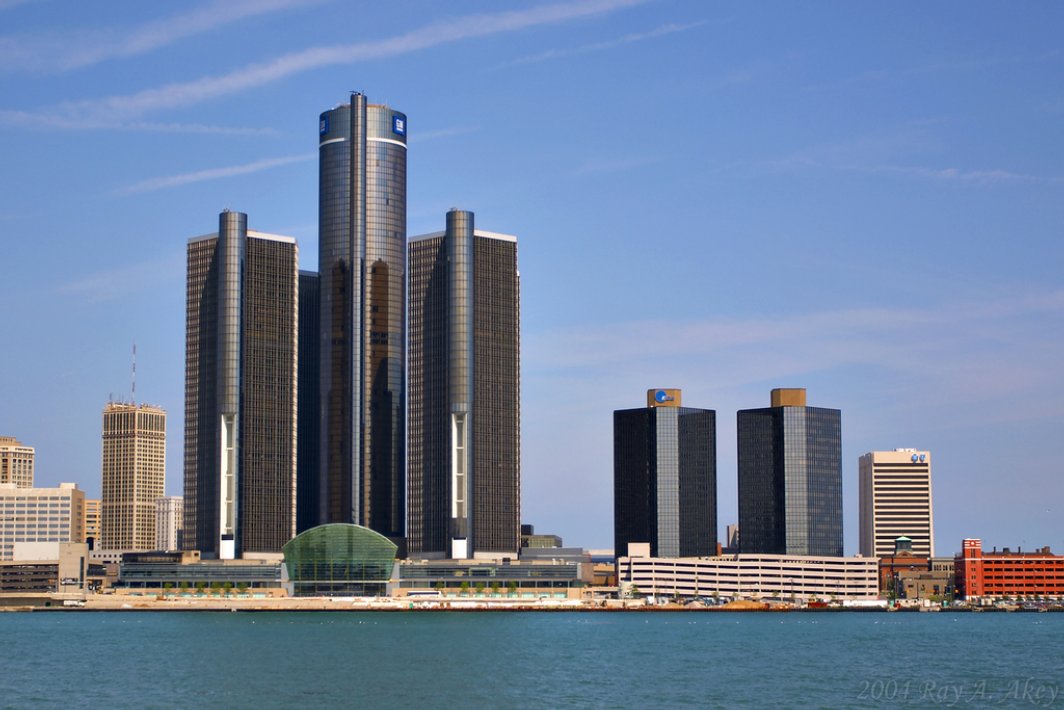
I've been away, dear reader in Canada and the States.
Apart from putting on about half a stone ( 3.5kgs if you are under 40) I had an excellent time.
The most interesting part was being in Detroit.
This once truly great American city has lost about 65% of it's population over the last 7 or 8 years. Whole sections of the city are derelict, cut off from their surroundings by the roads and dead car parks that leaders of the Automakers insisted be provided.
There are no buses or trains or trams - they wouldn't allow them. But they needed to get their workers to and from the huge plants dotted about the city, and they wanted them ALL to buy a car every year, so the roads got built.
Over time, it meant that sections of the city lost people, then imploded. All the shops are no longer in Detroit - they are in the malls, half an hours drive away.
The first Black Mayor ever in Detroit in the '70s ( not really surprising - over 80% of the population is Afro-Caribbean) tried hard to help the City, right into the '90s. All the things he wanted to do to redress the balance were fought tooth and nail by the car companies and by the whites. When he stepped down, he had achieved virtually nothing to redress the problems.
Now, the (white) mayor is beginning to suggest some of the things that should have been done nearly 40 years ago.
There are no people wandering around - why would they? There's nothing for them to do in terms of shopping or sports or anything. The car parks stand as mausoleums to a failed environment.
What struck me most forcibly was that even before the cars came, Detroit was a rich city. Indeed, one of the reasons the cars got built there was that the money and the infrastructure existed. The rich executives and owners of Ford, General Motors, Chrysler ( and all the long forgotten firms they swallowed up) gave millions to the city to found schools, art galleries, concert halls - they gave to the City in their droves, as well as building fine buildings both for themselves and their businesses.
Now, many of these buildings have no future other than being flattened, and the land underneath returned to pasture. Even Henry Ford's first production line factory lies derelict - a plaque claiming that in 1925 it produced over 9,000 Model T's in one day.
But why -what has happened now? People are still making money in Detroit - lots of it.
They just don't give it back, they take, and take again.
John F.Kennedy and his brothers still hold a strong grip of American's souls, and Teddy's death last year boosted that, as does the 50th Anniversary of Jack's Presidential address.
His words are everywhere, and they are as relevant today for America and for ourselves as they ever were:
" Ask not what your country can do for you, but rather, what you can do for your country."
We've all forgotten what that means.
PS The picture is of the Renaissance Centre, GM's world headquarters.
It's a fabulous building - with nothing round about it. They are starting to landscape and riverscape round about, but all the shops have gone and there are either expensive good restaurants or hash-joints in terms of food.
Subscribe to:
Posts (Atom)